Wednesday, 31 October 2012

EAST TIMOR'S BIG MOMENT

October 31, 2012

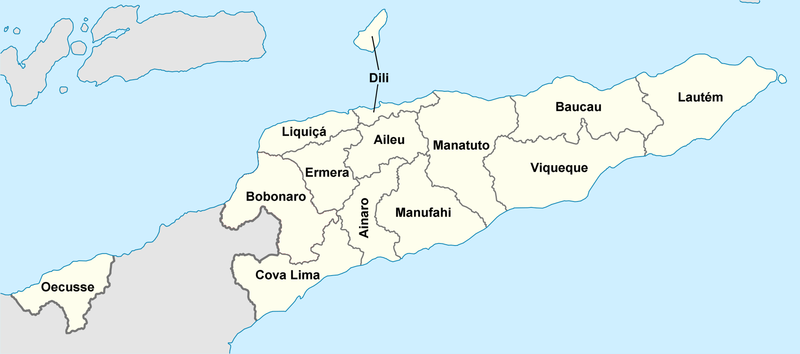
East Timor is a step closer to stability and the prosperity its off-shore oil deposits could bring, as the United Nations peacekeeping mission hands over the responsibility for policing the nation to the government.

The half-island nation of East Timor has had a troubled history. It freed itself from Portuguese rule in 1975, only to be occupied by Indonesia soon after. The subsequent struggle cost the lives of approximately 200,000 people, over half due to direct conflict and the rest through malnutrition. The 1999 UN sponsored referendum, which resulted in a clear vote for independence, was followed by such vicious reprisals by militias backed by Indonesia, that first Australia and then the UN had to intervene.

The situation was so volatile, that the UN stayed and administered the nation for three years. However, the dire economic situation following independence, which was declared on May 20, 2002, led to renewed outbreaks of violence and further interventions from Australia and the UN. The latter will now, at last, be withdrawing its force of approximately 1,200 police officers.

The country's first president, Xanana Gusmão, who was re-elected as prime minister last July, said that he was delighted that the National Police of East Timor "are assuming full responsibility for maintaining law and order".

East Timor now needs to set an example of responsible government to other new or emerging nations by tackling the partisanship, greed and corruption that has been holding it back these last ten years.

Tuesday, 30 October 2012

TRANSNISTRIA ON THE RIGHT SIDE OF EVENTS

October 30, 2012

Recognition of Transnistria may not be that far away, as events on both sides of its borders seem to be going in its favour.

On its eastern border, the outcome of the Ukrainian parliamentary election (see yesterday's post)lent towards the pro-Russian parties, while to its west, the rest of Moldova and Romania may be edging closer towards reunification, leading Russia to insinuate that it would fully recognise the sovereignty of Transnistria, if the the two countries were to merge. Moldova considers Transnistria, which declared its independence in 1990, part of its territory and the breakaway territory is not fully recognised by any United Nations member state. Nevertheless, if the benefits of unification to Romania were substantial enough, who is to say that the strip of mostly ethnic Russians will not be sacrificed by Moldova?

Transnistria, with its capital Tiraspol, has already managed to assert itself effectively as a presidential republic. It has its own parliament, security forces, postal system, currency and flag. It had split away after the breakup of the Soviet Union out of fear of being absorbed into Romania with the rest of Moldova. Whereas much of Moldova, or Bessarabia as part of it was called, had a strong affiliation with Romania, the territory of Transnistria was, since the late 1700s, very much under the influence of Russia. For Moldova to let it be, might not be such a bad idea.

Alexander Suvorov, founder of Tiraspol

UKRAINE CRITICISED FOR TAKING A "STEP BACKWARDS"

October 29, 2012

The Party of Regions, the Ukrainian pro-Russian party of President Victor Yanukovich, is on course to win a comfortable majority with the support of its traditional political allies. The party and its coalition partners are set to gain more than half of the 450 seats in the parliamentary assembly, thus allowing the incumbent an easy ride before his likely re-election bid in 2015. The new liberal party, UDAR of Vitaliy Klychko, led by Heavyweight boxing champion Vitaly Klitschko did fairly well, as did the far right nationalist party.

Whilst some independent observers were satisfied with the electoral process, the Organisation for Security and Cooperation in Europe, which sent more than 600 observers, expressed deep concerns regarding the fairness of the poll. Objections included "lack of transparency" with regards to campaign funding and a marked bias towards Mr Yanukovich's party by the permitted media. There are also serious doubts about the legitimacy of the continued detention of former prime minister Yulia Tymoshenko who was arrested on unsound and politically motivated charges, after having lost the last Presidential election to Mr Yanukovich in 2010. She has now started another hunger strike.

The overall assessment was that the way this election was conducted was a disappointing "step backwards" (alluding to the autocratic leadership of Leonid Kuchma in the 1990s). It is a great pity that this with all the potential Ukraine had to nudge Russia into the right direction, it had decided to follow it into dark days reminiscent of the worse that was the USSR.

Monday, 29 October 2012

GREEK EDITOR ARRESTED FOR EXPOSING TAX EVASION SUSPECTS

October 28, 2012

One would think that journalists were be safe enough in Europe, as long as they did not engage in phone hacking, taking sneaky photos of royal breasts or getting up the nose of the American administration... Well, Greek editor and journalist Costas Vaxevanis can prove that this is not always the case. He was arrested and released pending a trial for publishing the names of 2,059 people on an "official" list of possible tax dodgers.

Mr Vaxevanis claims the list was sent to him anonymously and relates to compilation sent to Greece by France a couple of years ago requesting an investigation into the tax dealings of the suspected evaders. Christine Lagarde, the managing director of the International Monetary Fund (IMF) was the French finance minister at the time, so the list has been dubbed "The Lagarde List".

Mr Vaxevanis, who published the document in the weekly magazine Hot Doc, justified his actions as being in the public interest:

"I did nothing more than what a journalist is obliged to do. I revealed the truth they were hiding. If anyone is accountable then it is those ministers who hid the list, lost it and then said it didn't exist. I did my job."

He has a point. Particularly in the current climate, where many of Greece's financial problems are said to originate from endemic tax evasion. If he has breached European data protection laws, then surely so have the government officials who lost the document in the first place.

Sunday, 28 October 2012

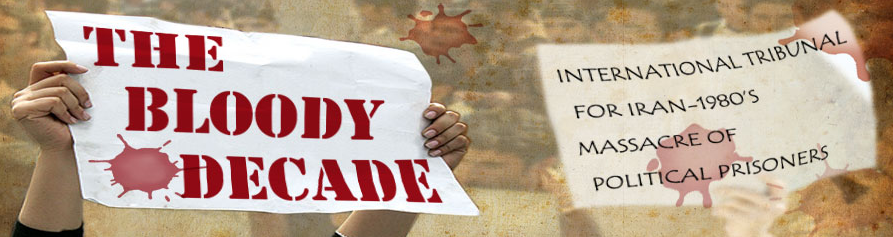
IRAN TRIBUNAL HIGHLIGHTS A DECADE OF ATROCITIES

October 27, 2012

Today the Court Hearings around the Islamic Republic of Iran's involvement in the execution of tens of thousands of citizens in the 1980s came to an end in the Hague. The session, which started on October 25, marks the conclusion of a two-part investigation into the atrocities. The first part consisted of the proceedings of the Truth Commission which took place at the Amnesty International Human Rights Action Centre in London from 18-22 June, 2012. This led to the publication of a 330 page Report, 260 of which consisted of witness statements and other evidence, which informed this week's hearing. Much of this evidence was horrific: hundreds of teenagers were said to have been exterminated, detainees were brutally tortured, and young women were alleged to have been raped prior to their execution, because Sharia Law forbids the killing of virgins...

The process was organised by the Iran Tribunal which does not hold any legal standing, but aims to highlight the the fact that crimes against humanity were committed, in the hope that the case will be taken up by the United Nations. In the words of the Commission:

"The Iran Tribunal Campaign is a social movement which was initiated by a group of individuals composed of the families of the victims of Iran's political prisoners, former Iranian political prisoners, the survivors of mass executions in the 1980s, political and labour activists, women's rights activists, lawyers, students, children's rights activists, writers, artists and human rights activists , who have been holding regular meetings since October 2007 in order to assess the possibility of setting up a "Truth Commission" and a "People's Court."

The idea of such a tribunal is not new, for instance Bertrand Russell and Jean Paul Sartre had organised a similar committee from 1965 to 1967 in order to investigate and publicise the atrocities carried out by American forces during the Vietnam War.

The Court Hearings will add weight to the Truth Commission's conclusion:

"These violations of human rights were devised, instigated and executed (or caused to be executed) by a single central authority and as such the Islamic Republic of Iran is the only authority responsible for these acts."

Let us hope that justice will be done at last, particularly seeing as many of the perpetrators of those heinous crimes are now in positions of privilege and power in today's Iran.
Saturday, 27 October 2012

MOUNTAIN GORILLAS FACE EXTINCTION AS GUERILLAS TAKE OVER

October 26, 2012

The promised truce offered by various rebels operating from Virunga National Park, that was supposed to allow rangers and conservationists to ensure the protection of the endangered gorillas living there, appears to have come to an end as two rangers and a soldier are killed in an ambush. Five rebels, thought to belong to the Mai Mai militia, were also killed as military guards shot back.

The park, in the Democratic Republic of Congo, is the home to the largest concentration in the world of mountain gorillas, with about 480 out of 790 living there. The gorillas are threatened with extinction owing to human incursions into their habitat. The militias, which include M23 guerillas, have had a particularly devastating effect on the primates and on other wildlife in the National Park, owing to their disregard for the environment and animal welfare. The extreme threat to rich bio-diverse Virunga National Park is such, that the UN has placed it on its list of endangered World Heritage sites.

Since 1996, more that 130 rangers have been murdered while bravely trying to protect the primates from militia and poachers. The military are helping protect them, but clearly more needs to be done. At this rate we will soon be left with guerillas, but with no gorillas or rangers.

Friday, 26 October 2012

IF TRUTH IS THE FIRST CASUALTY OF WAR, JOURNALIST CANNOT BE FAR BEHIND

October 25, 2012

President Hassan Sheikh Mohamud of Somalia has only been in office for a few weeks and despite his excellent credentials, it will no doubt take a good while before he can start making an impact.

Mr Mohamud has to deal with al-Shabab, the Islamist group that is linked to al-Qaeda and that has wielded control over much of the country, and the host of other problems linked to secessionists, the economy and security.

Security is particularly problematic if you happen to be a journalist. This week, yet another has been assassinated, bringing the total killed to 16 so far this year. Ahmed Saakin Farah Ilyas was a television journalist with Universal Television operating in the breakaway, and generally more peaceful territory of Somaliland; he was shot on October 23, at just 25 years of age.

Reporters Without Borders, now ranks Somalia with Syria at the top of the list of deadliest countries for journalists. However, it appears as though the culprits are not solely from the ranks of al-Shabab. Powerful politicians and businessmen are also alleged to be involved. As yet, no one has been convicted for any of these deaths.

Journalists are generally murdered for uttering the truth and their killers would be hypocritical in deed not to acknowledge that they are amongst the most demonic forces on earth. Only a few weeks ago, in Pakistan, it was the 14-year-old Malala Yousafzai, these truth-haters tried to eliminate. If there is such a thing as selling one's soul to the Devil, then they cannot be far from it.